
 By Helen Wick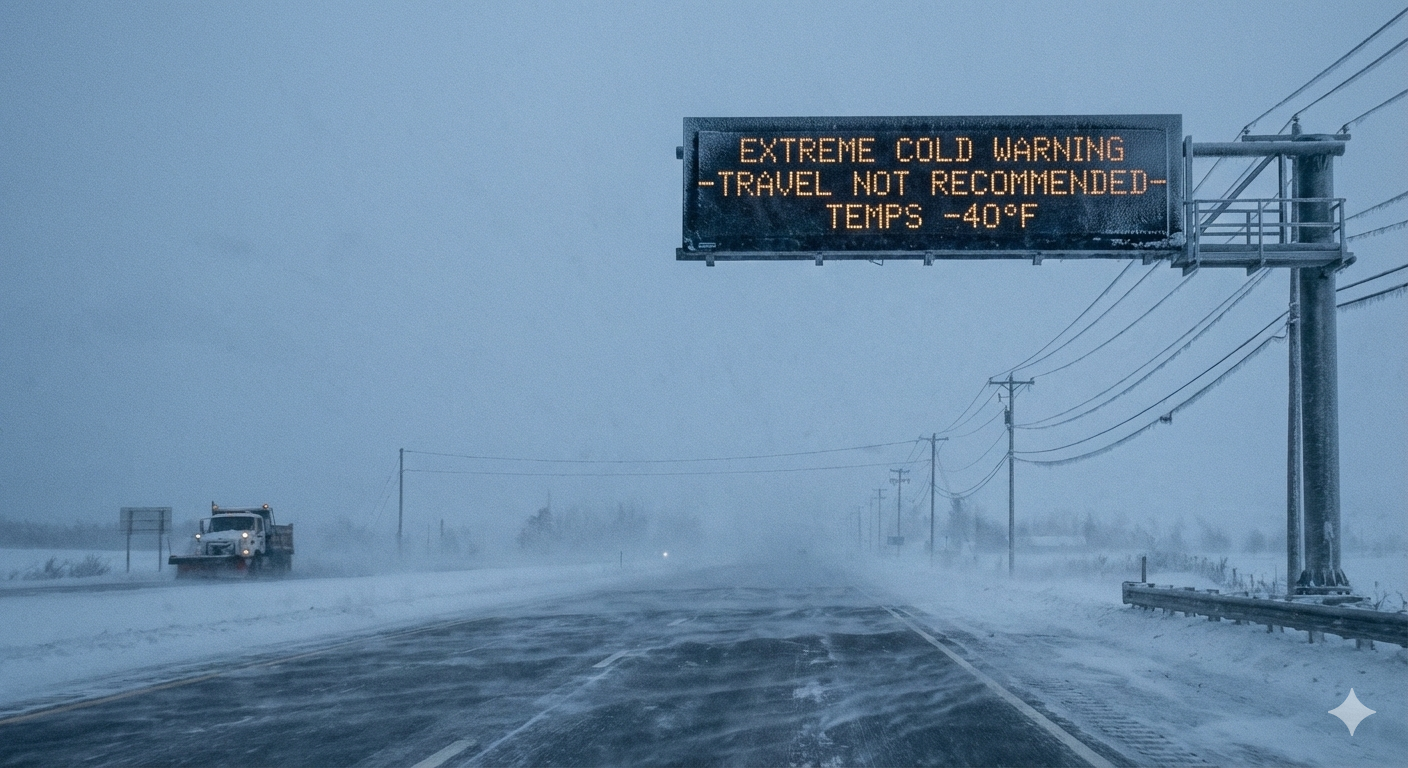
As of January and February 2026, the United States is facing a generational weather event. Winter Storm Fern has plunged over 213 million Americans into winter weather alerts, with Extreme Cold Warnings active across 26 states from Texas to New England. With record-breaking lows of -34°F in New York and -4°F in North Texas, understanding the risks is no longer optional—it is essential for survival.
What is an Extreme Cold Warning?
According to the National Weather Service (NWS) 2026 standards, an Extreme Cold Warning is issued when dangerously low temperatures or wind chills are expected to fall to levels that can cause frostbite or hypothermia in 10 minutes or less.
Unlike a simple “Frost Advisory,” this warning indicates a life-threatening threat to anyone outdoors without specialized gear. It also signals a high risk of catastrophic infrastructure failure, specifically regarding power grids and residential plumbing.
- Wind chills reach -25°F to -40°F in northern states.
- Temperatures drop into the single digits or teens in southern regions (like Texas and Louisiana) where infrastructure is less prepared for deep freezes.
Winter Storm Fern: Affected States & Current Status
The “Fern” system has created a 2,000-mile spread of disruption. As of Monday evening, the following impacts are confirmed: Record-breaking lows are being recorded across 26 states.
| Region | Primary Alert | Key Impact (Jan 26, 2026) |
| Northeast (NY, MA, PA) | Extreme Cold Warning | Record snow (12-18″) and “Flash Freeze” on I-95. |
| Midwest (OH, IN, IL) | Blizzard Warning | Wind chills reaching -35°F; 1M+ without power. |
| South (TX, MS, TN) | Hard Freeze / Ice Warning | Catastrophic ice accumulation (up to 1″) in Nashville and Dallas. |
| Northern Plains | Life-Threatening Cold | Ambient temps near -40°F; all travel discouraged. |
Key Regional Impacts:
How to Survive the 2026 Deep Freeze: Safety Protocols
In a 2026 environment where the power grid is under immense strain, follow these “Rule of Three” safety tips:
1. The “Rule of Three” for Layers
- Wicking Layer: Synthetic or wool to keep moisture away from your skin.
- Insulating Layer: Fleece or down to trap body heat.
- Shield Layer: Windproof and waterproof outer shell to stop the arctic blast.
2. Protect Your Home and Plumbing
With temperatures remaining below freezing for over 72 hours in states like Texas and Tennessee, pipes are at high risk.
- Drip all faucets connected to exterior walls.
- Open cabinet doors to let internal heat reach the pipes.
- Set thermostats no lower than 68°F, even if you are away.
3. Identify Hypothermia and Frostbite
If you must go outside, monitor for the “Umbles”: Stumbling, Mumbling, Fumbling, and Grumbling. These are early signs of Hypothermia. Frostbite can appear as waxy, white, or numb skin on the nose, ears, or fingers.
The Science of the Chill: Wind Chill Calculation
The severity of the current Extreme Cold Warning USA 2026 is driven by high wind speeds. To calculate your local risk, use the NWS Wind Chill formula.
Where:
FAQ: Frequently Asked Questions
Q: Is Winter Storm Fern worse than the 2021 freeze? A: In terms of geographic spread, yes. Fern has impacted 34 states simultaneously, causing over 15,000 flight cancellations—the highest single-day total in modern history.
Q: When will the Extreme Cold Warning be lifted? A: While the storm will move offshore by Tuesday, the “Arctic Wake” is expected to keep temperatures well below normal through Wednesday, January 28, 2026.
Q: Can I use a generator inside? A: NO. Never use generators, grills, or camp stoves indoors. Carbon monoxide is a silent killer during winter storms.
Q: Is it safe to drive during an Extreme Cold Warning?
A: Only if absolutely necessary. Modern vehicle batteries lose roughly 60% of their strength at 0°F. If you must travel, carry an emergency kit with blankets, a shovel, and a portable power bank.
Q: When will Winter Storm Fern end?
A: Forecasters expect the storm to exit the Northeast by late Monday night, but the “arctic wake” (the extreme cold) will linger through Wednesday, January 28.
Q: Why are they calling it an “Extreme Cold Warning” instead of “Wind Chill Warning”?
A: The NWS updated its terminology in late 2024 to better reflect the danger of cold air itself, even without high winds, ensuring the public takes the threat seriously regardless of the wind speed.
Next Step: Would you like me to draft a “Community Emergency Response” social media kit to help your readers share these tips across Facebook and X?
Team coverage of the 2026 winter storm impacts
This video provides an in-depth look at how the current extreme weather is threatening nearly 180 million Americans and offers real-time updates on the National Weather Service alerts.
When an Extreme Cold Warning is issued, your priority is heat retention and property protection.
[…] Office Issues Amber “Danger to Life” […]