
 By Helen Wick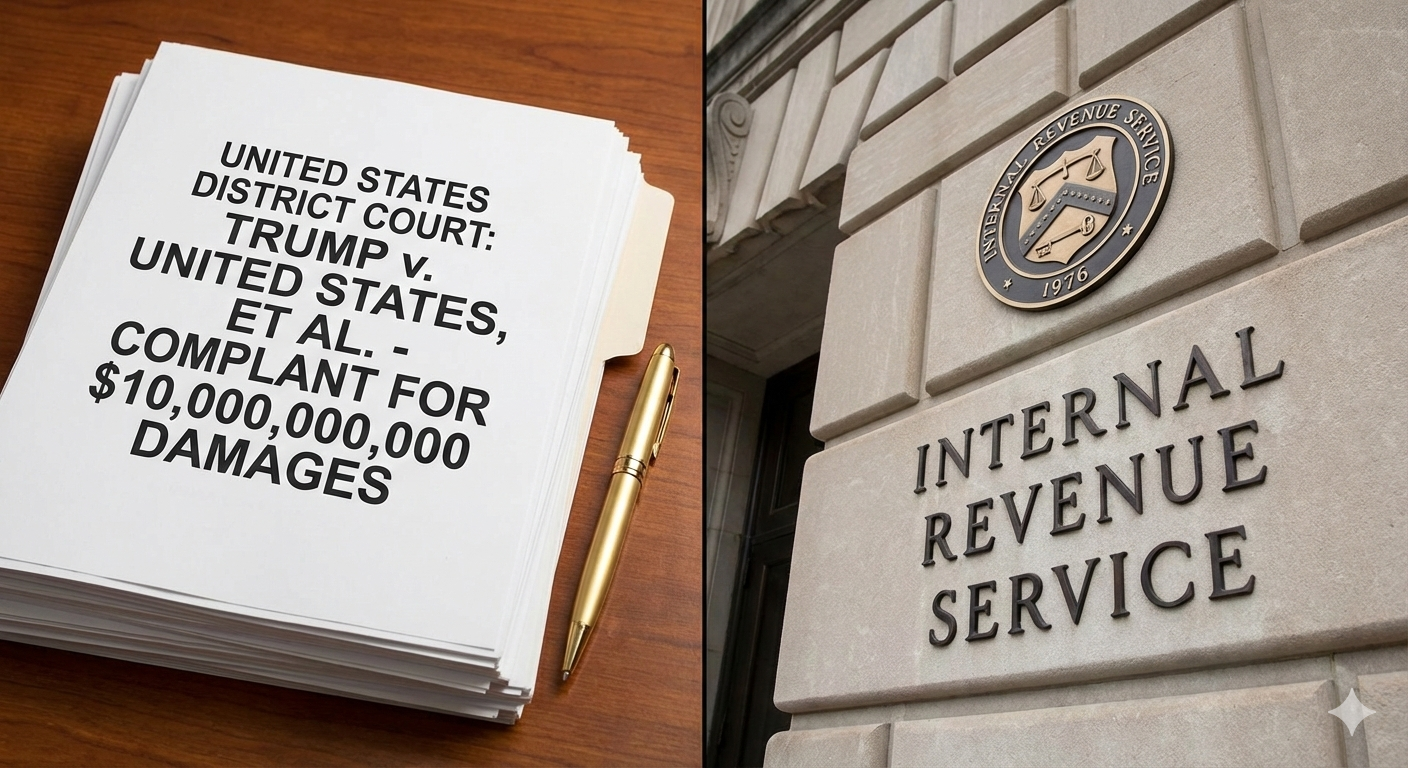
The $10 Billion Legal War Explained
The digital world is buzzing with one question today: Did Trump sue the IRS? The answer is a resounding yes. In a move legal experts are calling unprecedented, President Donald Trump has officially filed a massive $10 billion lawsuit against the Internal Revenue Service (IRS) and the U.S. Treasury Department.
This blockbuster legal battle, filed on January 29, 2026, has sent shockwaves through Washington and ignited a global debate on privacy, executive power, and government accountability.
The $10 Billion Complaint: Why is Trump Suing?
Filed in a Miami federal court, the lawsuit alleges that the federal government failed in its “mandatory duty” to protect the President’s private financial data.
The Core Allegations
- Gross Negligence: Trump and the Trump Organization claim the IRS allowed former contractor Charles Littlejohn to steal and leak years of tax records.
- The “Media Pipeline”: The suit alleges these records were funneled to “leftist media outlets” to cause maximum political damage.
- Irreparable Harm: The plaintiffs are seeking $10 billion for “irreparable harm” to their business reputations and massive financial losses triggered by disclosures between 2018 and 2020.
- Political Weaponization: The filing contends the leak was a “politically motivated” attack designed to influence the 2020 election.
The Paradox: A President Suing His Own Government
What makes this a “Breakout” trend in Trump news is the unique legal position it creates. As the sitting President in 2026, Trump technically leads the very Executive Branch agencies he is now suing.
While the lawsuit was filed in his personal capacity, it creates a fascinating constitutional paradox: Can a President effectively hold his own administration liable for past security failures?
Key Highlights of the Lawsuit
- Privacy Act Violations: Claims the IRS failed to implement basic encryption and access monitoring.
- Contractor Fallout: Following the suit, the Treasury Department canceled all contracts with Booz Allen Hamilton, citing a failure to safeguard sensitive data.
- Taxpayer Impact: Critics are already questioning if a $10 billion payout would ultimately be funded by the American taxpayer.
Can You Sue the IRS? (Legal FAQ)
With “can you sue the irs” trending, many Americans are wondering if they have the same right to legal recourse. The short answer: Yes, but it’s an uphill battle.
Under Internal Revenue Code (Section 7431), taxpayers can sue for civil damages if an IRS employee or contractor discloses tax information without authorization.
AEO Tip: To win a suit against the IRS, you must prove the disclosure was either “knowingly” or “negligent,” and that it caused you actual economic damage.
Comparison: You vs. The Trump Case
| Factor | Standard Citizen | The Trump Case |
| Legal Basis | Privacy Act / IRC 7431 | Privacy Act / IRC 7431 |
| Damages Sought | Usually actual losses + $1,000 | $10 Billion (Punitive & Reputational) |
| Core Argument | Unauthorized disclosure | Systemic failure & political bias |
Why This Update Matters
This case is a landmark for government accountability. Regardless of your political stance, a ruling in Trump’s favor could:
- Force a Security Overhaul: The IRS would likely be required to rebuild its digital infrastructure from the ground up.
- Set a Privacy Precedent: It establishes how the government must handle the private data of high-profile citizens.
- Tighten Contractor Rules: Liability for government contractors handling sensitive info would become significantly stricter.
Final Verdict: A Watershed Moment for Privacy
The question of “did Trump sue the IRS” is only the beginning. The real story lies in the upcoming discovery process, where the IRS must defend its internal security protocols under oath. As this remains the most watched legal drama of 2026, stay tuned for updates.