
 By Helen Wick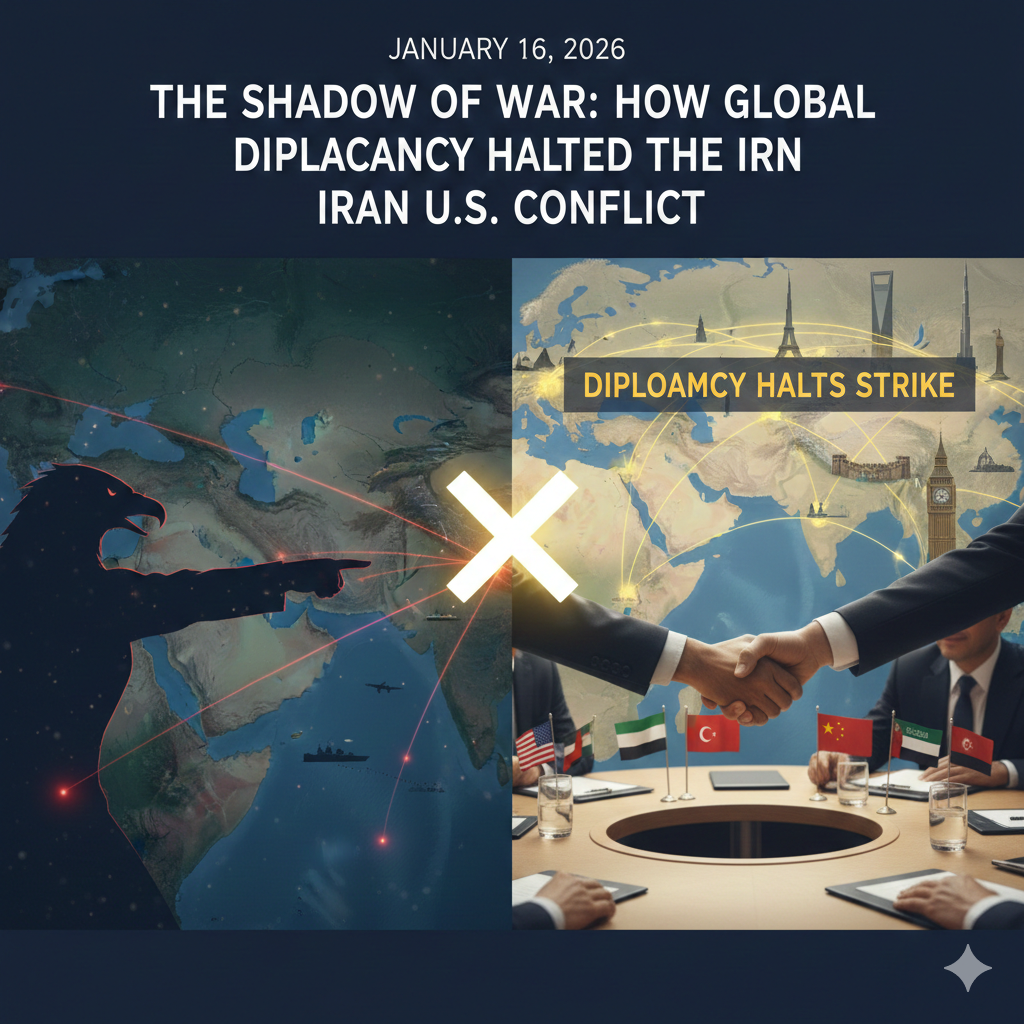
In January 2026, the world witnessed a period of extreme tension that nearly led to a direct military confrontation between the United States and Iran. However, in a significant turn of events, a planned U.S. strike was reportedly de-escalated due to intensive diplomatic pressure and back-channel involvement from major global powers across Asia, the UAE, and Europe.
Here is a verified breakdown of the events that led to the “failed” or suspended attack and the roles played by various international actors.
The Shadow of War: How Global Diplomacy Halted the Iran-U.S 2026 Conflict
The start of 2026 saw Iran gripped by nationwide protests. As the situation inside the country became increasingly volatile, President Donald Trump warned of imminent military strikes if the Iranian government continued its crackdown on demonstrators. By January 14, 2026, military assets were moving, and European intelligence suggested an attack could occur within 24 hours.
1. The UAE and Gulf Nations: The “Regional Shield”
The United Arab Emirates (UAE) and Saudi Arabia played a pivotal role in preventing an escalation. While both nations have long-standing concerns regarding Iran’s regional influence, they viewed a direct U.S. strike as a catastrophic risk to their own security and economic stability.
- Refusal of Territory: Reports indicate that Saudi Arabia and the UAE explicitly informed Washington that they would not allow their territory or airspace to be used for offensive operations against Iran.
- Back-channel Diplomacy: Gulf diplomats engaged in “sleepless nights” of negotiations to act as a bridge between Tehran and Washington. They warned that an attack would trigger a “grave blowback” that would destabilize the global energy market.
2. Asia’s Strategic Pressure: China and Turkey
The involvement of Asian powers added a layer of economic and geopolitical weight to the de-escalation efforts.
- China’s Stability Concerns: As a primary buyer of Iranian oil and a major trade partner in the region, China pressured both sides to exercise “maximum restraint.” Beijing’s primary goal was to prevent a disruption in the Strait of Hormuz, which would have crippled Asian energy supplies.
- Turkey’s Vocal Opposition: Ankara publicly opposed any military operation, fearing a new wave of regional instability and refugees at its borders.
3. The European Warning
European allies, while condemning the human rights situation in Iran, maintained that military intervention would only strengthen the hardline elements of the Iranian regime.
- Intelligence Sharing: European officials were the first to leak the “24-hour window” for an attack, effectively sounding a global alarm that gave diplomats the time needed to intervene.
- The UN Platform: European nations used the UN Security Council as a stage to advocate for a “diplomatic path” over a military one, isolating the idea of a unilateral strike.
Why the Attack Was “Put on Hold”
By January 16, 2026, signs of de-escalation became official. Several factors forced a rethink in Washington:
- Iranian Assurances: Tehran reportedly issued a “good statement” through intermediaries, claiming that planned executions of protesters were halted.
- Allied Misgivings: Not even Israel was fully prepared for the immediate fallout. Prime Minister Netanyahu reportedly asked Trump for “more time” to prepare for the inevitable Iranian retaliation.
- Military Logic: Analysts argued that a “one-off” strike would fail to achieve long-term goals and would instead unite the Iranian public against a foreign aggressor.
| Actor | Stance | Action Taken |
| United States | Imminent Strike | Moved Carrier Strike Group to Persian Gulf; later suspended. |
| Iran | Retaliation | Informed neighbors that U.S. bases in their territory would be targets. |
| UAE/Saudi Arabia | Neutrality/Mediation | Refused use of airspace; conducted 48-hour diplomatic marathon. |
| Europe | De-escalation | Urged UN intervention; warned against regional blowback. |
The Current Outlook
While the immediate threat of a “big bang” conflict has subsided, the situation remains a “cold war” on a knife’s edge. Sanctions remain in place, and communication between U.S. and Iranian officials is still largely suspended or handled through third parties like Qatar and Oman.
The “failure” of the attack wasn’t a failure of military capability, but a rare moment where global interdependence, the shared need for oil, trade, and regional stability, forced the world’s most powerful actors to choose the negotiating table over the battlefield.